
Table of Contents
Introduction
If you’re looking for a workout that’s energetic, enjoyable, and effective, Zumba is one of the best fitness options available today. Combining dance movements with aerobic exercises, Zumba has become a global fitness phenomenon that attracts people of all ages and fitness levels. Unlike traditional workouts that can feel repetitive, Zumba transforms exercise into an exciting dance party, making it easier to stay motivated and consistent.
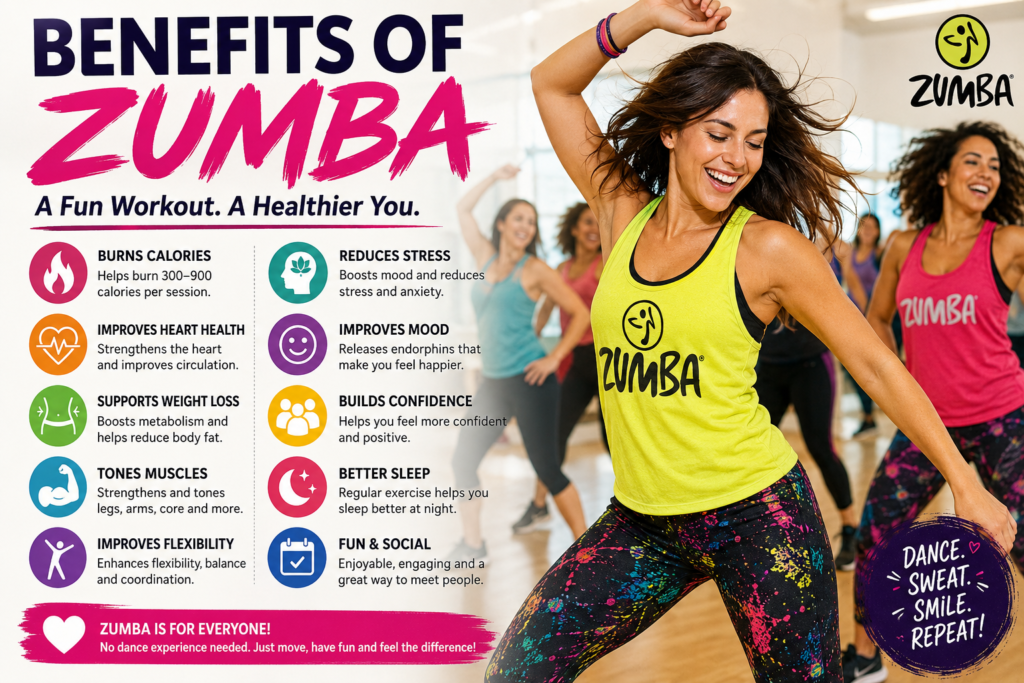
The benefits of Zumba go far beyond burning calories. It improves cardiovascular health, strengthens muscles, enhances flexibility, boosts mental well-being, and promotes social interaction. Whether your goal is weight loss, stress relief, or simply leading a healthier lifestyle, Zumba offers a complete fitness solution.
In this comprehensive guide, we’ll explore the numerous benefits of Zumba, explain why it has become one of the world’s most popular fitness programs, and discuss how incorporating Zumba into your weekly routine can positively impact your physical and mental health.
What Is Zumba?
Zumba is a dance fitness program that combines Latin-inspired dance styles with aerobic exercise. It features music from various genres, including salsa, merengue, reggaeton, cumbia, hip-hop, Bollywood, and even contemporary pop songs.
Created in the 1990s by Colombian dancer and choreographer Alberto “Beto” Perez, Zumba quickly gained international recognition because it makes exercise feel less like a workout and more like a celebration. Participants follow simple dance routines led by certified instructors while moving continuously to upbeat music.
One of the biggest benefits of Zumba is that people don’t need previous dance experience. The routines are easy to follow, making Zumba accessible to beginners as well as experienced fitness enthusiasts.
Top Benefits of Zumba
1. Helps Burn Calories Efficiently
One of the most recognized benefits of Zumba is its impressive calorie-burning potential. Depending on your body weight, workout intensity, and fitness level, a single 60-minute Zumba session can burn between 400 and 800 calories.
Since Zumba combines cardio with interval-style movements, your heart rate stays elevated throughout the workout. This encourages your body to burn fat while improving overall endurance.
Regular participation in Zumba can contribute significantly to maintaining a healthy weight when combined with balanced nutrition.
2. Supports Healthy Weight Loss
Weight management becomes easier when exercise is enjoyable. Many people quit traditional workout routines because they become bored after a few weeks. Zumba, however, keeps participants engaged through changing music and varied dance routines.
Among the greatest benefits of Zumba is that consistency becomes much easier. The more consistently you attend classes, the more calories you burn and the greater your chances of achieving sustainable weight loss.
Additionally, Zumba increases your daily activity level, helping improve your overall metabolism.
3. Improves Cardiovascular Health
Heart health is one of the most important aspects of overall wellness. Since Zumba is primarily a cardiovascular workout, it strengthens the heart and improves blood circulation.
Some cardiovascular benefits of Zumba include:
- Improved heart function
- Better blood circulation
- Reduced risk of heart disease
- Increased lung capacity
- Improved endurance
- Better oxygen delivery throughout the body
Over time, regular participation can help lower resting heart rate while improving stamina for everyday activities.
4. Builds Full-Body Strength
Although many people consider Zumba only a cardio workout, it also engages multiple muscle groups simultaneously.
Dance movements activate muscles in the:
- Legs
- Glutes
- Core
- Back
- Arms
- Shoulders
One of the underrated benefits of Zumba is that it tones the body naturally without requiring heavy weightlifting. Squats, lunges, twists, and arm movements strengthen muscles while improving coordination.
5. Enhances Coordination and Balance
Zumba routines require participants to move in different directions while coordinating footwork and arm movements.
Initially, these movements may seem challenging, but regular practice significantly improves:
- Balance
- Agility
- Reflexes
- Body awareness
- Motor skills
These benefits of Zumba are especially valuable for older adults who wish to maintain mobility and reduce their risk of falls.
6. Improves Flexibility
Many dance routines involve stretching, twisting, bending, and reaching.
As your body adapts to these dynamic movements, flexibility gradually improves. Better flexibility reduces muscle stiffness and makes everyday movements easier.
The flexibility-related benefits of Zumba include:
- Increased range of motion
- Better posture
- Reduced muscle tightness
- Lower injury risk
- Improved athletic performance
7. Boosts Mental Health
Exercise releases endorphins, often called “feel-good hormones.” Since Zumba combines physical activity with uplifting music, it creates a positive emotional experience.
Many participants report feeling happier immediately after class.
Some important mental benefits of Zumba include:
- Reduced stress
- Improved mood
- Increased confidence
- Better emotional balance
- Greater motivation
The lively environment helps participants temporarily forget daily worries while focusing on movement and music.
8. Reduces Stress and Anxiety
Modern lifestyles often lead to chronic stress and anxiety.
One of the major benefits of Zumba is its ability to provide an emotional outlet. Dancing encourages self-expression while rhythmic movement naturally helps calm the nervous system.
Music also plays an important role by stimulating positive emotions and reducing stress hormones.
Regular classes can become an effective part of a healthy stress-management routine.
9. Improves Cognitive Function
Zumba isn’t only beneficial for your body—it also exercises your brain.
Learning new dance combinations requires concentration, memory, and quick decision-making.
The brain-related benefits of Zumba include:
- Improved memory
- Better focus
- Enhanced reaction time
- Increased mental alertness
- Better coordination between brain and body
These mental challenges help keep your mind active while making workouts enjoyable.
10. Increases Energy Levels
Although exercise requires physical effort, it ultimately increases energy rather than depleting it.
Regular Zumba participants often experience:
- Reduced fatigue
- Better stamina
- Higher productivity
- Improved sleep quality
- Increased daily energy
One of the long-term benefits of Zumba is improved physical conditioning, making everyday activities feel less tiring.
11. Encourages Social Interaction
Unlike solo gym workouts, Zumba classes create a welcoming community atmosphere.
Participants often build friendships while exercising together.
The social benefits of Zumba include:
- Meeting new people
- Increased motivation
- Better accountability
- Stronger sense of belonging
- Improved confidence in group settings
This supportive environment encourages long-term commitment to fitness goals.
12. Suitable for All Fitness Levels
One reason for Zumba’s worldwide popularity is its accessibility.
Whether you’re a beginner, senior citizen, athlete, or someone returning to exercise after a long break, routines can usually be modified according to individual fitness levels.
Among the greatest benefits of Zumba is that participants can work at their own pace while gradually improving endurance and coordination.
There’s no pressure to perform every movement perfectly. The focus is on staying active, enjoying the music, and moving consistently.
13. Promotes Better Posture
Many Zumba movements engage the core muscles, shoulders, and back, helping improve posture over time. Stronger core muscles provide better spinal support, reducing the tendency to slouch during daily activities.
As participants become more aware of their body movements, posture naturally improves both during exercise and throughout everyday life.
These posture-related benefits of Zumba can also help reduce minor aches caused by prolonged sitting or poor body alignment.
14. Strengthens Core Muscles
A strong core is essential for maintaining stability, balance, and proper posture. Many Zumba routines involve twisting, bending, and rhythmic hip movements that naturally engage the abdominal and lower back muscles.
One of the significant benefits of Zumba is that it strengthens your core without requiring traditional abdominal exercises like crunches or sit-ups. Over time, improved core strength supports better movement, reduces the risk of lower back pain, and enhances overall athletic performance.
15. Improves Endurance
As you attend Zumba classes regularly, your body gradually adapts to continuous movement and aerobic activity. What initially feels challenging becomes easier after a few weeks of consistent participation.
Among the long-term benefits of Zumba is improved endurance. You’ll notice that everyday activities such as climbing stairs, walking longer distances, or participating in recreational sports become less tiring. Increased stamina also helps you perform better during other forms of exercise.
- Zumba Gold for older adults
- Aqua Zumba for water-based exercise
- Zumba Kids for children
- Zumba Toning with light weights
- Strong Nation for higher-intensity training
Because classes can be modified according to individual ability, nearly everyone can participate safely with proper guidance.
Tips to Get the Most Out of Zumba
To fully enjoy the benefits of Zumba, keep these practical tips in mind:
Wear Comfortable Clothing
Choose breathable workout clothes that allow you to move freely. Proper athletic shoes with good support help reduce stress on your joints during dance movements.
Stay Hydrated
Zumba is an energetic workout that can cause significant sweating. Drink water before, during, and after class to maintain hydration and support recovery.
Start Slowly
If you’re new to exercise, begin with one or two sessions each week. As your fitness improves, gradually increase the frequency and intensity.
Focus on Enjoyment
Don’t worry about performing every step perfectly. The goal is to stay active, enjoy the music, and have fun while exercising.
Listen to Your Body
While it’s normal to feel challenged during exercise, stop and rest if you experience dizziness, severe pain, or unusual discomfort.
Who Can Benefit from Zumba?
The benefits of Zumba make it an excellent choice for a wide range of people, including:
- Beginners looking for a fun introduction to exercise
- Adults aiming to lose weight
- Office workers seeking stress relief
- Seniors wanting to improve mobility
- Students looking for an enjoyable fitness routine
- Busy professionals who prefer engaging workouts
- Individuals who dislike conventional gym exercises
Since classes are available at different intensity levels, participants can select programs that match their fitness goals and abilities.
Are There Any Risks?
Although the benefits of Zumba are numerous, it’s important to exercise responsibly.
Potential risks include:
- Muscle soreness for beginners
- Minor ankle or knee strain from improper footwear
- Overexertion if exercising beyond your fitness level
- Dehydration if fluids are not replaced
These risks can usually be minimized by warming up properly, wearing supportive shoes, maintaining good technique, and following the instructor’s guidance. Individuals with existing medical conditions should consult a healthcare professional before beginning any new exercise program.
Frequently Asked Questions
How many times a week should I do Zumba?
For most adults, attending Zumba classes three to five times per week provides excellent results. Even two sessions per week can deliver noticeable benefits of Zumba when combined with healthy eating and an active lifestyle.
Can beginners do Zumba?
Yes. One of the greatest benefits of Zumba is that it welcomes beginners. The dance routines are designed to be easy to follow, and instructors usually demonstrate modifications for different fitness levels.
Is Zumba good for weight loss?
Yes. Zumba combines cardiovascular exercise with continuous movement, helping burn calories while improving overall fitness. When paired with a balanced diet, it can support healthy and sustainable weight loss.
Does Zumba help reduce stress?
Absolutely. One of the emotional benefits of Zumba is its ability to reduce stress through music, movement, and social interaction. Many participants report feeling happier and more relaxed after each session.
Can older adults participate in Zumba?
Yes. Low-impact options such as Zumba Gold are specifically designed for older adults, focusing on improving mobility, balance, and cardiovascular health while reducing stress on the joints.
Final Thoughts
The benefits of Zumba go far beyond simply burning calories. It is a complete fitness program that combines cardiovascular exercise, strength training, flexibility, balance, and mental wellness into one enjoyable activity. Unlike many traditional workouts, Zumba emphasizes fun, making it easier for people to stay motivated and maintain a consistent exercise routine.
Whether your goal is weight management, improved heart health, stronger muscles, reduced stress, or increased confidence, the benefits of Zumba make it an excellent addition to almost any fitness plan. Its energetic music, supportive group atmosphere, and adaptable routines ensure that people of all ages and fitness levels can participate and enjoy positive results.
The long-term benefits of Zumba include better endurance, enhanced coordination, improved mood, increased energy levels, and a healthier lifestyle overall. By making Zumba a regular part of your weekly schedule, you can enjoy both physical and mental improvements while having fun at the same time.
If you’ve been searching for a workout that doesn’t feel like a chore, now is the perfect time to experience the benefits of Zumba for yourself. Put on your favorite workout clothes, turn up the music, and take the first step toward a healthier, happier, and more active life through the exciting world of Zumba.